
What causes snoring?
When you fall asleep, the muscles that control your tongue and throat relax. The tissues at the back of your throat sag and your airway narrows. The air you breathe then makes the soft tissues around your throat vibrate, and that sound is snoring.
Often snoring is no more than an annoyance to the person sleeping beside you. But loud, regular snoring can be a sign of a more serious problem: obstructive sleep apnoea.
What is obstructive sleep apnoea (OSA)?
Obstructive sleep apnoea is when the relaxed muscles and sagging tissues block the airway so much that your body is starved of oxygen during sleep. When the brain detects the fall in blood oxygen, it wakes you up, often many times a night. People with OSA may have hundreds of these episodes a night but are unlikely to remember any of them.
Signs of sleep apnoea
- Loud, regular snoring
- Waking up tired and unrested
- Feeling lethargic through the day
Why OSA matters
OSA is a serious health risk that affects about 1.2 million Australians, or one in twenty. It is strongly tied to other health problems, in ways that are not yet fully clear.
- Regular snorers have a 33% higher risk of cardiovascular disease
- People with OSA are four times more likely to have a heart attack
- 40 to 80% of people who have had a stroke also have OSA
Treatment for snoring and OSA
There are several treatment options, including:
- Continuous positive airway pressure (CPAP): a face mask worn with a ventilator machine
- Surgery to correct the upper airway
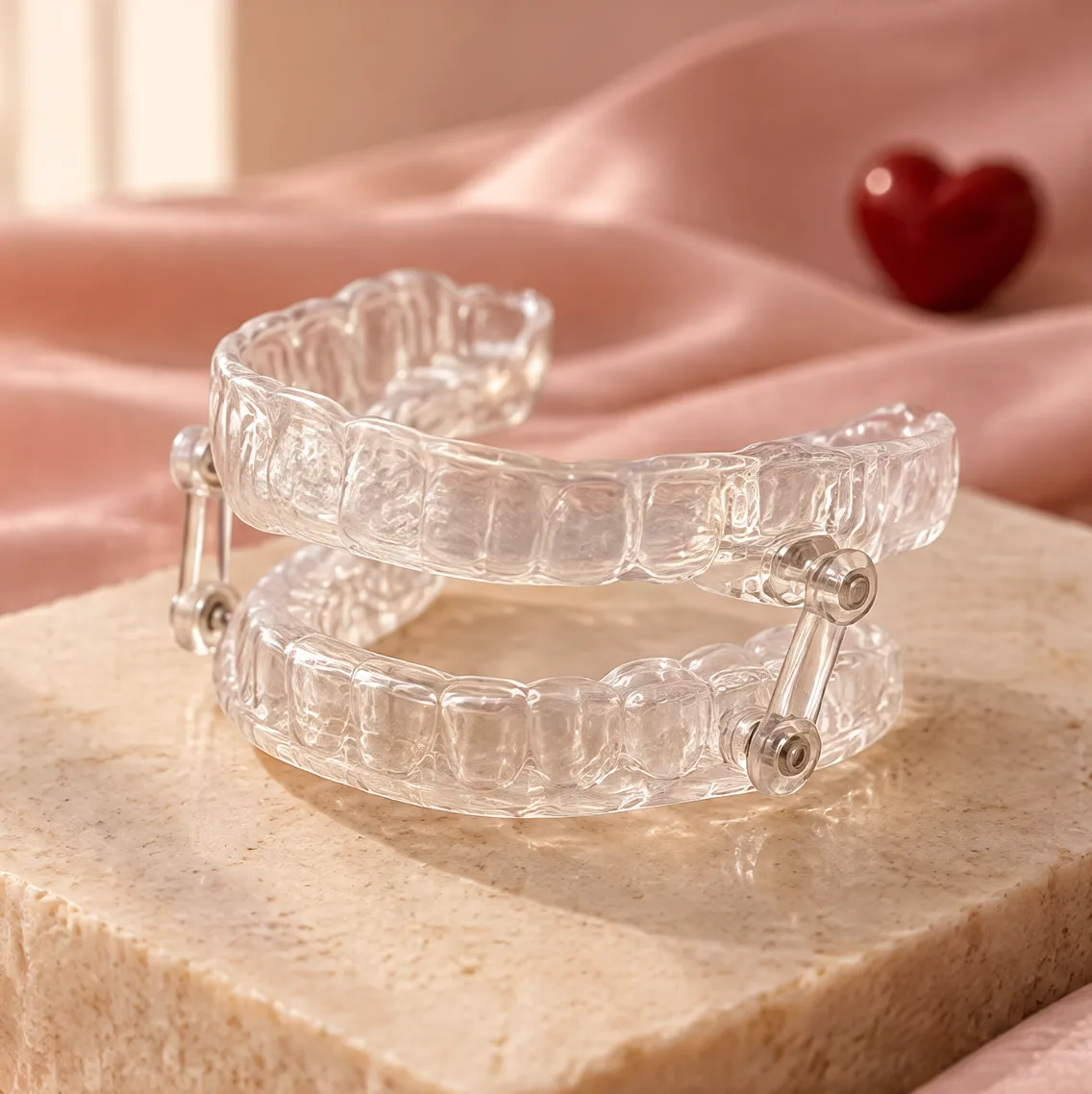
- Mandibular advancement splints (MAS), also called anti-snoring devices
How we can help
Our dentists are trained by SomnoMed, a company that makes simple devices to treat obstructive sleep apnoea.
We strongly recommend a sleep study before you use an anti-snoring splint. We can work with your GP and sleep physician on your care.
If you have been diagnosed with obstructive sleep apnoea and would like to look at options other than CPAP, send us a message or call our Blackburn clinic. You may also like to read about obstructive sleep apnoea in children.
