
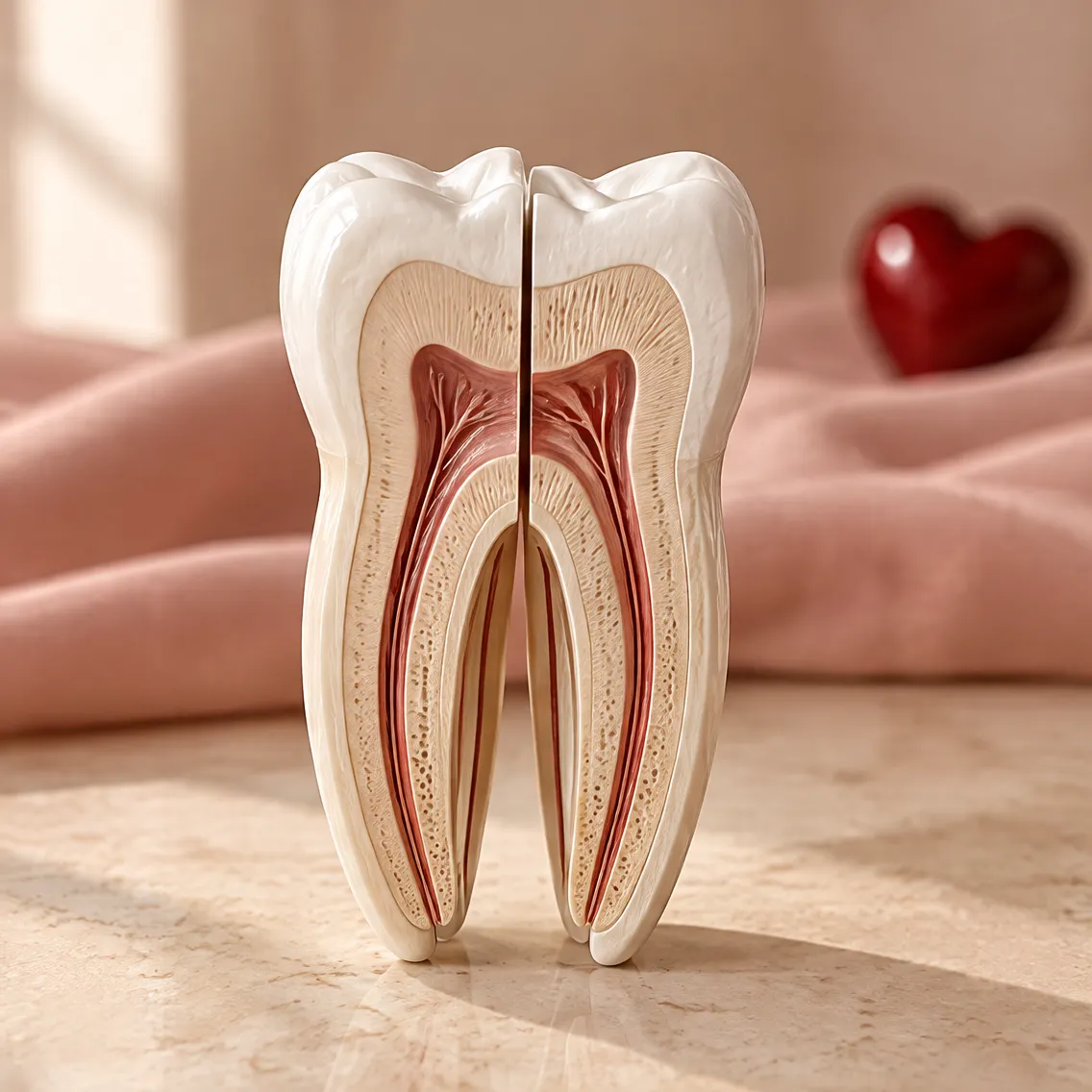
Signs you may need root canal treatment
- Pain in the tooth that comes on by itself and keeps going
- Sharp pain in the tooth from hot or cold food and drinks
- Pain in the tooth when biting or chewing
- The tooth feels a little loose and tender to touch
- Swollen gum around the tooth
- Swelling in the face
If you have any of these signs, call us. We offer emergency appointments for dental pain.
What happens during a root canal procedure?
Numbing the tooth
Once your dentist has diagnosed and confirmed which tooth is causing the problem, they numb it with local anaesthetic.
Removing the infected nerve
Much like a filling, your dentist makes a small opening in the top of the tooth and removes the infected nerve from inside. The aim is that by the time the anaesthetic wears off, the pain you came in with is less intense, and your body begins to heal as it responds to the treatment.
Cleaning and filling the roots
We recommend coming back to complete your root canal treatment within a month of this first visit for pain relief. At the return visit, your dentist carries out a similar procedure to clean bacteria from the tooth roots, then fills the empty spaces to keep bacterial growth to a minimum.
Protecting the tooth
In most cases, a crown or an onlay is recommended for added protection. Your dentist will discuss this with you.
